
继承者们
工信部:“十五五”时期将加快培育“人工智能+”“机器人+”等重大应用场景_我的网站

一 | 讯 8月26日,国务院新闻办公室举行“开局起步‘十五五’”系列主题新闻发布会,介绍全力抓好“十五五”规划实施,加快推进新型工业化有关情况。 工业和信息化部规划司司长姚珺在会上介绍,新兴产业是引领产业升级发展的新动能、新引擎。
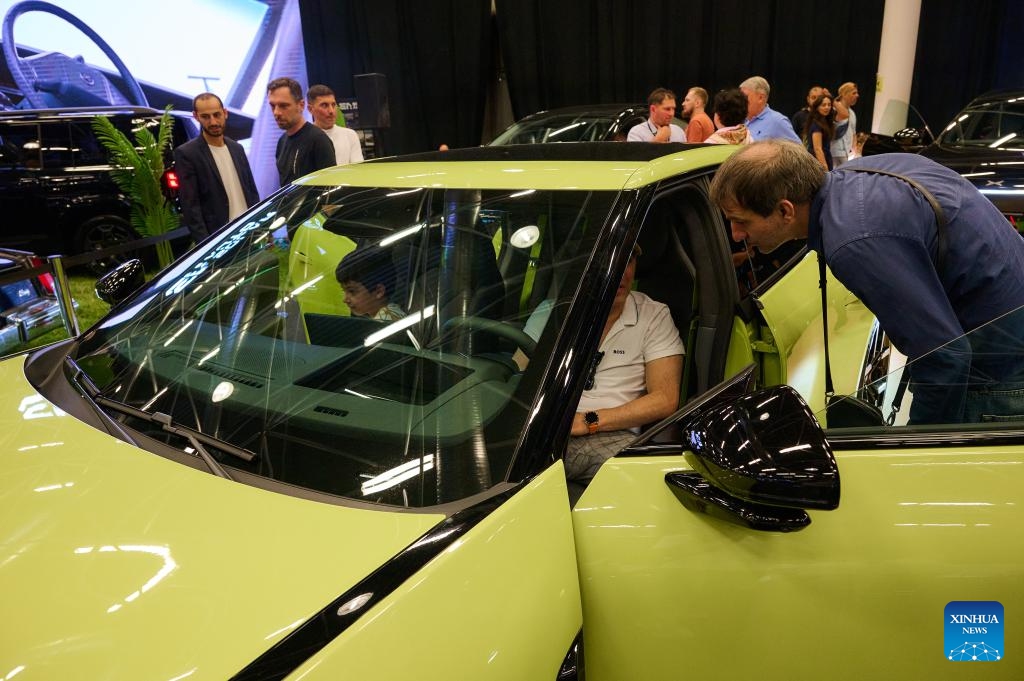
China-made electric vehicles (EVs) accounted for 14.2 percent of European market sales in the first five months of 2026 despite the EU's steep tariffs. The growth showed that trade‑protectionist barriers can only serve as short‑lived obstacles, as consumers' purchasing choice ultimately hinges on product competitiveness and China's EV strengths will support the automakers' long‑term growth, Chinese experts said.
The market share of electric cars sold by Chinese companies rose to 14.2 percent in European market in the first five months of this year, according to Schmidt Automotive Research. The 171,800 EVs sold there represented an increase in market share of five percentage points from one year earlier, the Guardian reported on Sunday.
The increase in European sales comes despite EU tariffs of up to 35.3 percent for EVs made by some Chinese manufacturers, on top of the standard 10-percent import duty. The UK is the largest European market for Chinese cars because London has declined to follow the EU's lead in imposing more levies. The UK accounted for a quarter of Chinese EV sales in Europe, according to the report.
Cui Dongshu, secretary-general of the China Passenger Car Association, told the Global Times on Monday that the surge showed trade protectionist policies have failed to contain Chinese automakers' overseas expansion.
Chinese EVs enjoy "a generational edge" over Europe's legacy carmakers. Their overall product strength remains the primary reason behind their popularity among European buyers, Cui said.
Meanwhile, fluctuating global oil prices have pushed up driving costs throughout Europe, fueling demand for affordable electric vehicles, a need well‑met by the affordable Chinese‑made models. Meanwhile, the gradual return of European electric‑vehicle purchase subsidies has lowered purchase barriers and lifted total EV sales, which has in turn worked to the advantage of Chinese exporters, Cui Dongshu said.
Chinese brands expanded their market share in Europe in the first half of 2026 driven by local subsidies and higher oil prices, Fitch Ratings said in a report sent to the Global Times.
The combined market share of leading Chinese brands in the EU, European Free Trade Association and UK rose to 11 percent in the first half of this year, up from 7 percent in the first half of 2025. The largest Chinese players, Geely Group (including Volvo Car) and SAIC Motor, expanded steadily despite the tariffs. The main drivers of market share gains were BYD, Chery and Leap Motor, according to Fitch Ratings.
Cui Dongshu noted that China's EV edge comes from its full‑fledged industrial ecosystem.
Officials from China's Ministry of Commerce told a press conference on July 28 that China boasts a complete, high‑efficiency EV industrial chain covering raw materials, auto parts, finished cars and production equipment, with industry clusters enabling rapid component supplies. China's huge market, the world's largest, has fueled 11 consecutive years of EV sales.
"Protectionism can only put up short‑term entry barriers. It cannot erase the solid strengths of Chinese EVs or stop Chinese brands from establishing a lasting foothold in Europe," Cui Dongshu said.
Yet, geopolitical risks remain as the EU reportedly considers expanding tariffs to restrict Chinese plug-in hybrid EVs.
German media Handelsblatt reported on June 19 that the EU is drawing up new measures to shield its single market more tightly against Chinese imports in the near future, citing senior EU officials and industry insiders. Specifically, the plan could contain countervailing duties to be levied on Chinese‑made plug‑in hybrids.
The rising market share of Chinese‑brand EVs amid EU tariffs has demonstrated that trade barriers cannot distort market choices. If the EU carries out its planned countervailing duties on Chinese plug‑in hybrids, the measure will yield only limited results, Cui Hongjian, a professor at the Academy of Regional and Global Governance at Beijing Foreign Studies University, told the Global Times on Monday.
Europe's problems stem from weak competitiveness and flawed energy policies. The EU ought to cast aside its confrontational mindset, remove unfair restrictions and pursue consultations and cooperation with China. Shifting industrial‑sector conflicts outward cannot remedy the weaknesses of its EV sector and will only damage the EU's reputation for destroying free trade, Cui Hongjian said.
。将深入贯彻落实“十五五”规划《纲要》部署,实施发展壮大工业新兴产业打造新动能行动,多措并举加快新兴产业规模化发展,提升产业全球竞争力,打造一批新兴支柱产业。 抓好技术攻关,推动新兴领域创新成果加速突破。

二 | 纵深推进重大技术装备攻关和产业基础再造工程的实施,聚焦战略领域和产业链供应链薄弱环节,补短板、锻长板、强基础,采取超常规措施,全链条推动集成电路、工业母机、高端仪器仪表、基础软件和工业软件、先进材料、生物制造等重点领域关键核心技术攻关取得决定性突破。

三 | 优化制造业创新中心、中试基地等平台布局,补齐关键共性技术供给短板。 抓好载体建设,推动新兴产业重点园区和企业加速壮大。

四 | 创建国家新兴产业发展示范基地,聚焦新一代信息技术、新能源、新材料、智能网联新能源汽车、机器人、生物医药、高端装备、航空航天等新兴产业重点领域,打造一批引领新兴产业发展的标杆。

五 | 到2035年,将力争培育100家左右在产业集群发展、协同创新、生态优化、治理提升等方面具有辐射带动作用的示范园区,1000家左右在产品开发、技术创新、业态创新、管理效能等方面处于领先水平的示范企业。 抓好场景培育,推动新技术新产品新场景大规模应用加速成势。开展制造业新技术新产品新场景大规模应用示范,加快培育“5G+”“人工智能+”“机器人+”“工业互联网+”“北斗+”等重大应用场景,完善标志性项目遴选、新技术新产品新场景清单发布、供需对接等机制,一体推进创新成果在真实场景中进行测试验证和迭代升级,推动相关领域产业化落地和大规模应用。

六 | 抓好生态优化,推动要素资源向新兴产业加速集聚。深入推进新产业标准化领航工程,实施“科技产业金融一体化”专项,建设国家卓越工程师实践基地,创新发展服务型制造和生产性服务业,加快健全与新兴产业发展相适应的标准、金融、人才等服务保障体系。实施大中小企业数字化协同转型试点、制造业卓越质量提升工程,支持龙头企业联合上下游组建创新联合体,促进大中小企业融通发展、产业链上下游协同创新。版权申明:凡注有“”或电头为“”的稿件,均为独家版权所有,未经许可不得转载或镜像;授权转载必须注明来源为“”,并保留“”的电头。

七 | 。
Current article:http://lrp19z.shuosongzoutunchutao.cfd/65vn/i6clf6.html
Published on:10:32:36
爱与罚_Random reading
- 08-21“曾小贤”回应了!网传《爱情公寓》即将回归
- 08-20杨瀚森队友重伤!夏普遭遇右膝半月板撕裂:预计将缺席6个月
- 08-25搞中国特色?新西兰考虑对现有高速公路收费......
- 08-22双色球2026090期开机号分析(附历史)
- 08-26杰伦布朗给年轻运动员建议:进联盟就要看好钱
- 08-20新西兰女尸悬案,身上一器官曾切除过!30至50岁之间…
- 08-21黑石投资Futronic
- 08-26“民政惠民生 福彩龙江行”2026年首场公益宣传活动在林都伊春启幕
- 08-22中国国际水果展开幕 多国嘉宾看好中国市场提质机遇,中国国际水果展开幕 多国嘉宾看好中国市场提质机遇
- 08-23China, Africa deepen cooperation on digital development
尼基塔第三季_Active users
- 顺丰回应“月薪 15% 划为季度绩效”调整:非降薪,旨在完善员工激励机制、不涉及一二线员工
- A股午评:创业板指半日跌1.43%,黄金、锂矿、稀土等概念走弱
- HoopsHype评选历史20大小前锋:詹姆斯断层第一,排名引发热议
- 2025年杭州绿城育华幼儿园寒假放假通知
- Several states in Australia ordered to evacuate amid flood alert
- 淅川:多元业态深度融合 激活暑期文旅经济
- 小米股东套利近22亿港元,股价下跌2.41%。
- 手机公司没得选
- Upcoming Hollywood Movies Releasing in December 2025: Avatar: Fire and Ash and More
- 月之暗面回应K3:做难而正确的事,不惧马斯克挑战
- 曼三手机公司于1月15日宣布推出与猪相关的新产品。
- Supreme Court Decision to Reverse Roe v. Wade to Galvanize Democrat Base Ahead of Midterms - Experts
- 南票区气象局:政企合作 开启“智慧防灾”新篇章
- 数码考古:微软首款智能手机问世比苹果 iPhone 早约 5 年
- “福泽江淮·彩惠民生”——铜陵福彩销售员走进枞阳县福利院
- 希腊豪门正式报价约基奇遭拒!明夏会再次追逐 坚信能签下掘金超巨
- 『食感が最高』納豆と切干大根があったら試して!混ぜるだけで箸が止まらない副菜「毎朝食べたい」
- 《巫师3:狂猎》DLC旧时曲新图公布!首发中配 最低GTX1660
毛骗_Hottest this week
- 继承者们 copyright
- Some of the content comes from the Internet. If you have any offence, please raise it.